
Sunday, 8 March 2015


Friday, 6 March 2015
Willing Blindness Part Five: Grace vs. Magical Thinking

Can I blame Walt Disney and Tinker Bell? Can I try and find a pattern as to why so many men and women in their 70s on down do not understand the theology of the sacraments? Talking with someone who has not been to Church in years and thinks she is saved because of that action clearly indicates a Catholic infected with "magical thinking".
A person who has apostatized thinks he can "con" God by doing good works outside the life of the sacraments, indulges in magical thinking.
Magical thinking seems to be the most common problem I constantly meet with Catholics regarding Baptism, Confirmation and the Last Rites.
Serious problems exist because many Catholics do not understand that the sacraments bring responsibility and must be met with responsibility. People do not understand grace.
Magical thinking is indicated by people who think that baptism of infants whose parents are either atheists, a priest told me that many priests baptize infants of practicing atheists and a priest in Walsingham a few years ago baptized anyone's children without preparation of any kind), or non-practicing Catholics. This is against the Canons, but indicates a lack of understanding on the part of the priests and the parents. Why would atheists, who have no intention of raising their children Catholic, desire baptism? Why would fallen away Catholics seek baptism for their children, when there is no demand that they come back into the Church or take classes? Grace is given but not "kept" in a bottle. Unless the children are raised in grace, they will quickly fall into mortal sin, or habits of venial sin, which will lead to mortal sin.
Why do priests baptize infants and children of pagans, who will not raise their children in the Faith? I now know several priests in different dioceses who know the Canons and ignore these. Why? Is this taught in the seminaries? Are bishops aware that this goes on in their dioceses?
Baptism takes away Original Sin and gives sanctifying grace. It makes a child an adopted child of God, and a member of the Catholic Church. Grace is not pixie dust.
Magical thinking states that baptism saves a person once and for all-the fundamental option. Magical thinking ignores the fact that grace is given freely by God, not earned, not kept under the circumstances of serious sin.
Magical thinking supposes the person stays in sanctifying grace without the sacraments or training to be a Catholic.
Magical thinking is protestant. The same magical thinking applies to Confirmation, when priests confirm young people who are not going to Mass on Sunday and are contracepting, clearly in mortal sin and not able to receive grace, which is only "receivable" if one is already in sanctifying grace.

Magical thinking wishes that people are saved without their free will being involved. Grace informs the intellect. Grace is given to us rational creatures so that we can choose the correct way to go spiritually, morally.
Magical thinking denies free will. We choose God and good. We have a lifetime to do this. We must respond to grace and work for our salvation in fear and trembling, states St. Paul.
Sanctifying grace is not a permanent state, nor is it once and for all, as many Protestants believe. It can be lost and in the case of mortal sin. We are deprived of sanctifying grace by the sin of Adam and Eve, and we must, therefore, be baptized. But we can lose that state of grace and those who no longer go to Sunday Mass, or abort, or contracept, or are in irregular marriages, have not only removed themselves from sanctifying grace, but from the community of God, the Church.
Here is the CCC on this point and I put this in bold type"
1861 Mortal sin is a radical possibility of human freedom, as is love itself. It results in the loss of charity and the privation of sanctifying grace, that is, of the state of grace. If it is not redeemed by repentance and God's forgiveness, it causes exclusion from Christ's kingdom and the eternal death of hell, for our freedom has the power to make choices for ever, with no turning back. However, although we can judge that an act is in itself a grave offense, we must entrust judgment of persons to the justice and mercy of God.
Any idea less is magical thinking. Here is the CCC again.
The Baptism of infants
1250 Born with a fallen human nature and tainted by original sin, children also have need of the new birth in Baptism to be freed from the power of darkness and brought into the realm of the freedom of the children of God, to which all men are called.50 The sheer gratuitousness of the grace of salvation is particularly manifest in infant Baptism. The Church and the parents would deny a child the priceless grace of becoming a child of God were they not to confer Baptism shortly after birth.51
1251 Christian parents will recognize that this practice also accords with their role as nurturers of the life that God has entrusted to them.52
1252 The practice of infant Baptism is an immemorial tradition of the Church. There is explicit testimony to this practice from the second century on, and it is quite possible that, from the beginning of the apostolic preaching, when whole "households" received baptism, infants may also have been baptized.53
1253 Baptism is the sacrament of faith.54 But faith needs the community of believers. It is only within the faith of the Church that each of the faithful can believe. The faith required for Baptism is not a perfect and mature faith, but a beginning that is called to develop. The catechumen or the godparent is asked: "What do you ask of God's Church?" The response is: "Faith!"
1254 For all the baptized, children or adults, faith must grow after Baptism. For this reason the Church celebrates each year at the Easter Vigil the renewal of baptismal promises. Preparation for Baptism leads only to the threshold of new life. Baptism is the source of that new life in Christ from which the entire Christian life springs forth.
1255 For the grace of Baptism to unfold, the parents' help is important. So too is the role of the godfather and godmother, who must be firm believers, able and ready to help the newly baptized - child or adult on the road of Christian life.55 Their task is a truly ecclesial function (officium).56 The whole ecclesial community bears some responsibility for the development and safeguarding of the grace given at Baptism.
As to the Last Rites...
Some people have been led to believe by some religious leaders, lay and priests, that people can be saved by certain prayers of others outside of the indulgences granted by the Vatican. Again, this is magical thinking. Faith allows us to pray for the dead and have Masses said for the dead. But, plenary indulgences are for the souls in purgatory, and may be prayed for those who have died outside the Church, but these indulgences are not prayers outside the merit of the entire Catholic Church. Quite the contrary. The Church passes the merit onto those people. Merit is gained by those Catholics who are in the state of grace.
We are called to evangelize, and to baptize, and no amount of magical thinking can substitute for spreading the Gospel.
Some people have been led to believe by some religious leaders, lay and priests, that people can be saved by certain prayers of others outside of the indulgences granted by the Vatican. Again, this is magical thinking. Faith allows us to pray for the dead and have Masses said for the dead. But, plenary indulgences are for the souls in purgatory, and may be prayed for those who have died outside the Church, but these indulgences are not prayers outside the merit of the entire Catholic Church. Quite the contrary. The Church passes the merit onto those people. Merit is gained by those Catholics who are in the state of grace.
We are called to evangelize, and to baptize, and no amount of magical thinking can substitute for spreading the Gospel.
Later, the types of graces....
Willing Blindness Part Four

A summary before I continue on grace:
We are all born with Original Sin. Baptism takes away the sin, which has separated us from God and grace.
So, what does baptism do?
One: it makes one a child of God. We are not born as adopted children of God; only once, in our life and with His Life, which is sanctifying grace, are we made children of God.
Two: it makes us co-heirs with Christ in eternal life and in the life of God on earth, with is the life of grace. Without baptism, we do not inherit heaven, nor the life of God, the Kingdom of God within. We receive the Indwelling of the Holy Trinity in baptism, not in any other way. We are heirs of God and heirs of heaven. (These points could be divided into three).
Three: we are given the means to achieve perfection, that is, through sanctifying grace. We are given the virtues of Faith, Hope and Charity. We are given the gifts to grow and develop the other virtues, not natural virtues, but supernatural ones.
Four: we are given salvation, which means, eternal life, if we cooperate with the graces and virtues given.
Five: we are made pleasing to God and just in His Eyes, through the Death and Resurrection of Christ, through the waters of baptism.
Six: we are given the means to gain merit. Only souls in grace, not those in mortal sin, can gain merit.
Seven: we are united with God in an intimate union.
All these items may be found in the Catechism of the Council of Trent, in the documents of the Church regarding baptism, and in the Scriptures, particularly the Letters of Paul and the Letters of John and in other catechisms, as well as the writings of the saints.
To believe that all people have access to heaven and the above gifts, as well as the state of grace becoming children of God without baptism is to be a heretic. It is too bad, but many Catholics fall into heresy for the following reasons.
One: like myself, there are children in our families, such as nieces, nephews, etc. who are not baptised and some people cannot bear the suffering of facing the truth about their state. I, for example, have a niece who is not baptised. This is a painful situation, but as I am not her parents, I can only pray that God will inspire her to be baptised someday.
Two: many Catholics cannot face the real tragedy of abortion, which is that the souls of these little victims may not be taken up into the Beatific Vision as those who are baptised. Unbaptized babies, as Blessed John Paul II stated, are in the mercy of God. But, we cannot assume that their state is the same as that of a baptised baby. Otherwise, we are denying the efficacy of the sacrament.
Three: many Catholics simply do not believe in Original Sin, hell, or purgatory. In other words, some believe in the heresy of universal salvation, which I think is the most common heresy in the world today.
Four: relativism regarding religions demands that baptism makes no difference as all good people go to heaven--this is a common heresy as well.
Five: the misunderstanding of the baptism of desire, which only applies to those over the age of reason who cannot because of serious circumstances, such as persecution, be baptised. Another person other than one's self cannot desire baptism for a second party.
Six: some Catholics believe all children are in a state of innocence simply because they are children. This is a sentimental idea which used to be common and still lingers on in some circles.
Seven: the misunderstanding of the Nature of God makes some think that God would never punish or damn a child. Now, invincible ignorance is always a possibility, but as I wrote in an earlier posting, children can choose evil and if not baptised, the choosing of good is much harder.
to be continued later and on grace, which is totally gratuitous and cannot be earned....
Thursday, 5 March 2015
Willing Blindness Part Three

What is missing from the understanding of so many is the concept of grace. Sacraments effect change. Sacraments give grace, and the graces of baptism have been undervalued among Catholics in the past three generations.
Again, my comments are in blue...
VII. THE GRACE OF BAPTISM
1262 The different effects of Baptism are signified by the perceptible elements of the sacramental rite. Immersion in water symbolizes not only death and purification, but also regeneration and renewal. Thus the two principal effects are purification from sins and new birth in the Holy Spirit.65
All the sacraments are efficacious, which means they actually do something and are not merely symbolic. One actual has a rebirth. One actually is purged of Original Sin, and one is actually made an adopted son or daughter of God in baptism.
For the forgiveness of sins . . .
1263 By Baptism all sins are forgiven, original sin and all personal sins, as well as all punishment for sin.66 In those who have been reborn nothing remains that would impede their entry into the Kingdom of God, neither Adam's sin, nor personal sin, nor the consequences of sin, the gravest of which is separation from God.
A friend of mine's dad came into the Church days before he died. How fortunate for him. To have all his punishment for sin forgiven. He most likely skipped purgatory.
What a sublime grace...his days of suffering were over. But, we who are baptized as babies have a higher calling to build up the Church with the graces given at baptism. This is the call of all Catholics. We are in a battle but not without grace. Too often, Catholics do not claim the great graces of baptism in order to fight concupiscence. Those who do, earn holiness and a place in heaven.
Many of the saints never committed mortal sin, not once, through the special efficacious grace of God. But, all of us are given tremendous strength in baptism to fight the tendency to evil which is within us and to become free of our predominant faults.
1264 Yet certain temporal consequences of sin remain in the baptized, such as suffering, illness, death, and such frailties inherent in life as weaknesses of character, and so on, as well as an inclination to sin that Tradition calls concupiscence, or metaphorically, "the tinder for sin" (fomes peccati); since concupiscence "is left for us to wrestle with, it cannot harm those who do not consent but manfully resist it by the grace of Jesus Christ."67 Indeed, "an athlete is not crowned unless he competes according to the rules."68
God does not ask the impossible from us and always gives us the grace we need to be the saint He created us from all time to be.
I hope to come back and discuss the graces of baptism in more detail and the virtues given.
Wednesday, 4 March 2015
Willing Blindness Part Two

Continuing with the teachings of the Church surrounding baptism, one reads these points in the CCC. Again, my comments in blue.
VI. THE NECESSITY OF BAPTISM
1257 The Lord himself affirms that Baptism is necessary for salvation.60 He also commands his disciples to proclaim the Gospel to all nations and to baptize them.61 Baptism is necessary for salvation for those to whom the Gospel has been proclaimed and who have had the possibility of asking for this sacrament.62 The Church does not know of any means other than Baptism that assures entry into eternal beatitude; this is why she takes care not to neglect the mission she has received from the Lord to see that all who can be baptized are "reborn of water and the Spirit." God has bound salvation to the sacrament of Baptism, but he himself is not bound by his sacraments.
Those of us who are baptized are given the task, not the option, of evangelizing all people and baptizing them in the Trinitarian form. Once a person has heard the Good News of the Gospel, they must decide yay or nay for baptism. To walk away after hearing the Gospel and being given, as all people are, sufficient grace for salvation, and the grace of conversion, is a serious omission.
Of course, we all know of baptism of desire and baptism of blood. Those who wanted baptism but could not get it and die desiring baptism, and those who die for Christ without it, have come into the fullness of the sacrament. These set of circumstances have happened in the Church.
1258 The Church has always held the firm conviction that those who suffer death for the sake of the faith without having received Baptism are baptized by their death for and with Christ. This Baptism of blood, like the desire for Baptism, brings about the fruits of Baptism without being a sacrament.
1259 For catechumens who die before their Baptism, their explicit desire to receive it, together with repentance for their sins, and charity, assures them the salvation that they were not able to receive through the sacrament.
To believe that all men and women who ever lived since Christ's Passion, Death and Resurrection, since the Harrowing of Hell, have not been given the chance to join Christ, is a heresy.
Those who have never heard the Gospel, and in these days of the Net and global communication, these people in complete ignorance would be rare, are blessed by God if they seek the truth and try to live moral lives according to natural law.
1260 "Since Christ died for all, and since all men are in fact called to one and the same destiny, which is divine, we must hold that the Holy Spirit offers to all the possibility of being made partakers, in a way known to God, of the Paschal mystery."63 Every man who is ignorant of the Gospel of Christ and of his Church, but seeks the truth and does the will of God in accordance with his understanding of it, can be saved. It may be supposed that such persons would have desired Baptism explicitly if they had known its necessity.
Now, here is a sticky wicket for some British Catholics. We give aborted children to God's mercy. We do not know what this means. But, we cannot presume that they experience the Beatific Vision like those children who are baptized.
The mercy of God is boundless. But, we must never deny the efficacious nature of baptism.
1261 As regards children who have died without Baptism, the Church can only entrust them to the mercy of God, as she does in her funeral rites for them. Indeed, the great mercy of God who desires that all men should be saved, and Jesus' tenderness toward children which caused him to say: "Let the children come to me, do not hinder them,"64 allow us to hope that there is a way of salvation for children who have died without Baptism. All the more urgent is the Church's call not to prevent little children coming to Christ through the gift of holy Baptism.
In Part Three, I shall return to the discussion of grace and baptism.
Tuesday, 3 March 2015
Willing Blindness Part One

Salvation and good works come from grace. No one can do either efficacious good works or be saved without grace.
Natural gifts, which we all have to some degree or another, including some "virtues" which may come from a person's natural personality, do not save us. These natural gifts must be enhanced by grace, which is received in baptism and the other sacraments of the Church.
At this time in history, especially in Great Britain, a battle of the spirit is waging among Catholics who have forgotten the meaning of baptism. Baptism is essential for salvation. Those saved outside baptism are not the norm and, indeed, a rarity. Here is the CCC on this subject but in this post, I shall begin merely with the first items under a long section on baptism. Let me put my comments in blue after each small section.
1213 Holy Baptism is the basis of the whole Christian life, the gateway to life in the Spirit (vitae spiritualis ianua),4 and the door which gives access to the other sacraments. Through Baptism we are freed from sin and reborn as sons of God; we become members of Christ, are incorporated into the Church and made sharers in her mission: "Baptism is the sacrament of regeneration through water in the word."5
Note that through baptism we are freed from sin, become sons and daughters of God, members of the Church and given the command to follow Christ's mission for the Church.
No one can be called a son or daughter of God without baptism, as they are not so. They are creatures, but not adopted into the family of God.
I. WHAT IS THIS SACRAMENT CALLED?
1214 This sacrament is called Baptism, after the central rite by which it is carried out: to baptize (Greek baptizein) means to "plunge" or "immerse"; the "plunge" into the water symbolizes the catechumen's burial into Christ's death, from which he rises up by resurrection with him, as "a new creature."6
One dies to sin and becomes someone new. One is not the same before baptism and after baptism. Each person is really a new being. This new person lives now in God and has been given not only the grace of salvation, but the virtues of faith, hope and charity, which are lacking in the person not baptized. These supernatural gifts are not natural.
1215 This sacrament is also called "the washing of regeneration and renewal by the Holy Spirit," for it signifies and actually brings about the birth of water and the Spirit without which no one "can enter the kingdom of God."7
One must be baptized to not only come into the Church, but to go into heaven. The enlightenment is not only the training one hopefully enjoys before baptism, but a renewal of the mind, to think like Christ, to put on the Mind of Christ.
I hope to write more on this subject because many Catholics in Great Britain do not understand the ontological difference between an unbaptized and a baptized person. The baptized person, if that person does not commit mortal sin, lives and walks in light. The unbaptized person, as Trent tells us, is "a slave of satan", unable to see the light and live in the life of the virtues.
Baptism cannot be hindered by parents or those in authority. Baptism is the right of every baby born into Catholic families. This heritage of passing the Faith down to the next generation, passing new life down into the lives of our children, is the greatest gift one can bestow on one's offspring.
Our natural gifts become efficacious in the life of the Holy Spirit. To deny the difference between those who now are sons and daughters of God and those who are not is a willing blindness.
1216 "This bath is called enlightenment, because those who receive this [catechetical] instruction are enlightened in their understanding . . . ."8 Having received in Baptism the Word, "the true light that enlightens every man," the person baptized has been "enlightened," he becomes a "son of light," indeed, he becomes "light" himself:9
- Baptism is God's most beautiful and magnificent gift. . . .We call it gift, grace, anointing, enlightenment, garment of immortality, bath of rebirth, seal, and most precious gift. It is called gift because it is conferred on those who bring nothing of their own; grace since it is given even to the guilty; Baptism because sin is buried in the water; anointing for it is priestly and royal as are those who are anointed; enlightenment because it radiates light; clothing since it veils our shame; bath because it washes; and seal as it is our guard and the sign of God's Lordship.10
Sunday, 22 February 2015
Raymond Cardinal Burke - Champion of Mercy
Over the last two years there have been a lot of words spoken about mercy and Pope Francis has said that the Church should be a field hospital that brings healing.
Sadly there are modern day Pharisees in the church who are more interested in gaining money - for example, certain clerics in Germany who would tolerate pretty much anything as long as they get their hands on money through the church tax.
There is nothing merciful in pretending that sin is not sin or in denying and undermining the words of Christ about marriage.
There is nothing merciful in making divorce easier and the tragedy that this brings to innocent children and spouses whose lives are destroyed.
There is nothing merciful about giving Holy Communion to a to-life politicians who use it as a publicity stunt to promote their murderous agendas.
True mercy consists of turning to Christ and receiving His forgiveness - in Baptism and after this in Confession, the sacrament of Reconciliation.
Raymond Cardinal Burke is someone who has promoted the sanctity of life (mercy for the unborn) and the defence of marriage (mercy for the family) and in encouraging us all to repent (mercy for us all, sinners).
Let the cry for mercy continue, but let's not confuse it with the actions of those who bow before powerful, anti - life politicians, mocking those who are faithful or the actions of those who would trample on everything Christ teaches as long as they rake in money in church taxes.
Sadly there are modern day Pharisees in the church who are more interested in gaining money - for example, certain clerics in Germany who would tolerate pretty much anything as long as they get their hands on money through the church tax.
There is nothing merciful in pretending that sin is not sin or in denying and undermining the words of Christ about marriage.
There is nothing merciful in making divorce easier and the tragedy that this brings to innocent children and spouses whose lives are destroyed.
There is nothing merciful about giving Holy Communion to a to-life politicians who use it as a publicity stunt to promote their murderous agendas.
True mercy consists of turning to Christ and receiving His forgiveness - in Baptism and after this in Confession, the sacrament of Reconciliation.
Raymond Cardinal Burke is someone who has promoted the sanctity of life (mercy for the unborn) and the defence of marriage (mercy for the family) and in encouraging us all to repent (mercy for us all, sinners).
Let the cry for mercy continue, but let's not confuse it with the actions of those who bow before powerful, anti - life politicians, mocking those who are faithful or the actions of those who would trample on everything Christ teaches as long as they rake in money in church taxes.
Let us take a moment to pray for Cardinal Burke that he might remain strong and for all who hold and teach the Catholic Faith which comes to us from the Apostles.

Monday, 16 February 2015
Paying Attention to Signs
In these times of confusion, the only thing one can do is stay close to Christ, His Church, and work on personal holiness.
May I add that to watch with Christ means being in the Garden of Gethsemane with Him, watching and praying, suffering with Him, in love.
Italy and France will help Libya against those who killed the Coptic Christian workers, who died for the Faith.
Do not fall either for the far right or the far left.
Remember, that our Faith is based on reason and not the emotions, or knee-jerk reactions to news items.
Pray, reflect, think, act. Most of all, try and get to daily Mass, weekly Confession and Adoration.
We can read the signs of the times. God is allowing evil to have its day for the purification of the Church, and for the punishment of gross sins.
This is a time for grown-ups, not children in the Lord. Pay attention, do not fall back into sleep.
Watch and pray.
May I add that to watch with Christ means being in the Garden of Gethsemane with Him, watching and praying, suffering with Him, in love.
Saturday, 7 February 2015
Monday, 2 February 2015
On Our Lady of Akita

All Catholics have been called to repent and say the rosary and Mary stated that if people did repent, she could stop the tribulation that is coming.
So, why did people not follow Akita? It has been ignored to our own peril. Akita is the apparition for our time. Some of the same ideas were shared by Our Lady at Betania on a great tribulation which will proceed before people repent. I suggest those who are concerned and worried read these words from Our Mother, especially at Akita.
Here is the last message from Our Lady from October 13, 1973:
“If men do not repent and better themselves, the Father will inflict a terrible punishment on all humanity. It will be a punishment greater than the deluge, such as one will never have seen before. Fire will fall from the sky and will wipe out a great part of humanity, the good as well as the bad, sparing neither priests nor faithful. The survivors will find themselves so desolate that they will envy the dead. The only arms which will remain for you will be the Rosary and the Sign left by My Son. Each day recite the prayers of the Rosary. With the Rosary, pray for the Pope, the Bishops and the priests.
“The work of the devil will infiltrate even into the Church in such a way that one will see Cardinals opposing Cardinals, Bishops against other Bishops. The priests who venerate Me will be scorned and opposed by their confreres (other priests). Churches and altars will be sacked. The Church will be full of those who accept compromises, and the demon will press many priests and consecrated souls to leave the service of the Lord.

“The demon will be especially implacable against the souls consecrated to God. The thought of the loss of so many souls is the cause of My sadness. If sins increase in number and gravity, there will no longer be pardon for them.
“...Pray very much the prayers of the Rosary. I alone am able to still save you from the calamities which approach. Those who place their confidence in Me will be saved.”
Our Lady of Akita, pray for us.
Thursday, 29 January 2015
A Rare Double Post
"Do You Want the Church to Remain Silent when She Should Speak?"

When I was growing up, Cardinal Josef Mindszenty was a hero in my family. My grandmother from Bohemian and Moravian background would speak of him as a saint. He should be canonized as such and the be the patron saint of those falsely accused of ODD..
Read about him here http://en.wikipedia.org/wiki/J%C3%B3zsef_Mindszenty
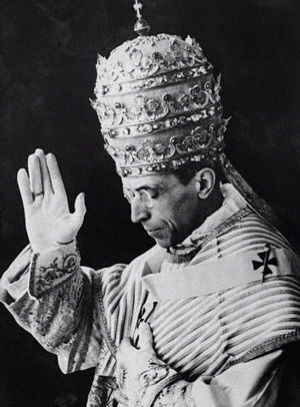
And, when I was six weeks old, Pope Pius XII said this of the Cardinal's show trial in St. Peter's Square. From the above article:
On 20 February, 1949, the Pope addressed a series of questions to "an enormous crowd which had gathered in St. Peter's Square" to protest the Cardinal's show trial and conviction. He asked, "Do you want a Church that remains silent when She should speak; that diminishes the law of God where she is called to proclaim it loudly, wanting to accommodate it to the will of man? Do you want a Church that departs from the unshakable foundations upon which Christ founded Her, taking the easy way of adapting Herself to the opinion of the day; a Church that is a prey to current trends; a Church that does not condemn the suppression of conscience and does not stand up for the just liberty of the people; a Church that locks Herself up within the four walls of Her temple in unseemly sycophancy, forgetting the divine mission received from Christ: 'Go out the crossroads and preach the people'? Beloved sons and daughters! Spiritual heirs of numberless confessors and martyrs! Is this the Church you venerate and love? Would you recognize in such a Church the features of your Mother? Would you be able to imagine a Successor of St. Peter submitting to such demands?"[17]
According to Sister Pascalina, who witnessed the rally, "In reply to the Holy Father came a single cry like thunder still ringing in our ears: 'No!'"[18]
Hebrews 10:19-25 and Mark 4:21 apply to us today more than ever.
A friend of mine did not want me to wear my cross in the Paris airport of Orly the day after the Je Suis Charlie shootings.
Of course, I did.
Another person I know said that one should avoid contentious discussions. We do not need to be argumentative, but we do need to stand up for the Faith.
Did you know that the psychological and psychiatric professions have defined an illness from the 1960s called Defiance Oppostional Disorder?
I do not think it is an illness, but a way to control dissent from government policies. I was speaking with a medical person who looked it up in his manual.
Can you guess which persons in history were labelled as having this?
Can you guess?
Gandhi, Jesus Christ, Martin Luther King.....I wish I was making this up but I saw it in the text.
Now, there is a bill which may be passed either by Congress or the president forbidding people who look at "conspiracy websites" or such blogs from getting gun licenses.
We, the Catholics, will be next...and remember, this is what the Soviert Union did to millions of priests, nuns and religious, as well as dissenting lay people--give them a diagnosis of insanity and send them to the Gulag.
So, you go weekly and pray outside an abortion clinic, which is part of a national, federal health scheme?
You could be diagnosed as having ODD.
If you want to look up more on this, check these out.
- www.mayoclinic.org/...defiant-disorder/.../con-20024559
- www.webmd.com/mental-health/oppositional-defiant-disorder
- psychcentral.com/disorders/oppositional-defiant-disorder-symptoms/
- en.wikipedia.org/wiki/Oppositional_defiant_disorder

Subscribe to:
Posts (Atom)
