Showing posts with label Pensee. Show all posts

Wednesday, 10 February 2016

What to Make of Ash Wednesday Marking

Ash Wednesday is the second most attended Mass in the Catholic calendar, even though it is not officially a holy day of obligation.

One of the features of the Ash Wednesday liturgy is the application of ashes on the faithfuls' foreheads to mark the start of Lent to represent our consciousness of our own sin and need for repentance. These sacramentals are not uniformly applied in the same manner, hence the waggish graphic of Ash Art.

Some non-liturgical Protestants question whether Christians should advertise their faith by walking around wearing schmutz on their forehead. They would question why we are not adhering to Matthew's admonition not to trumpet their faithfulness in public.

However, walking around with Ashes on their forehead is not exactly a boast of one's virtue.  In fact it is the opposite.  And unless Fr. Hollywood applies "The Hitchcock" or "Harry Potter" ashes, the mark is a variation of the Cross.  In the ancient world, the cross was a sign of shame, as it was the cruel way the Romans enforced their authority against "criminals".  In Christendom, it is a reminder of the Via Dolorosa which each of us are invited to take in our walk of faith.

Lest anyone think that Ash Wednesday Ash art is just a benign symbol, consider the case of Stuart Varney.  In 2001, the host of CNN's Moneyline, quit after CNN head honcho Ted Turner mocked those with ashen crosses on their foreheads as "Jesus Freaks".  

Sunday, 22 November 2015

On the Solemnity of Christ the King

Pope Pius XI on Christ the King


Many of the Catholic Faithful appreciate the Feast of Christ the King as marking the end of the liturgical year.  Those who pay attention to the scriptures explore eschatological issues. 

But it is useful to understand why the Feast of Christ the King was added to the Church calendar in 1925, through Pope Pius XI's Apostolic Letter Quas primus (1925). The Feast of Our Lord Christ the King emerged at a time in which nationalism, secularism, fascism and communism was sweeping the world.  It was placed as the last Sunday in October, and was intended to give the faithful strength and courage to live the Kingdom of God in this world.

In a motu propio Mysterii Paschalis  (1969) by Pope Blessed Paul VI, the feast was moved up to be a Solemnity and given a new formal name "Our Lord Jesus Christ, King of the Universe". By moving it to the last Sunday on the liturgical calendar, the significance of last things becomes more poignant.  

Many Protestant and Orthodox Christians, such as the Anglicans, Lutherans and the Russian Orthodox outside of Russia followed the motu propio after 1970 and moved celebration of "Christ the King" to the last Sunday before the start of Advent.


H/T: Fr. Geoffrey Plant, St. Michael's Catholic Church, Lane Cove, Archdiocese of Sydney, Australia

Tuesday, 10 November 2015

Pope Francis on the Church and Change?

Pope Francis on the Church and Change


During the 5th National Ecclesial Convention in Florence Italy, Pope Francis gave 45 minutes of remarks reflecting upon the Convention's theme of "In Jesus Christ, the New Humanism".


The Holy Father warned that Pelegianism (a heresy denying original sin) and Gnosticism (a heresy denying Christ's divinity) are temptations which defeat a true Christian humanism.

In this context, Pope Francis' exhortation to companion in Christ to all not limited by a closed system of doctrine makes more sense.  Pope Francis voiced a desire of a happy church with a face of a mother who understands, caresses and accompanies.  

These pastoral pronouncements echo the weltanshaaung of this papacy and look forward to the year of mercy.

What is concerning is the inference that Catholic doctrine can change, that moves and grows in the flesh of Jesus Christ. This doctrinal ambiguity led to much of the consternation concerning the recent Synod on the Family, in which "Mercy driven" (liberal) prelates may bend doctrine on marriage to accommodate civilly divorced and remarried Catholics so they receive Communion.

Thursday, 9 July 2015

Some of Pope Francis and the Communist Cross

Pope Francis on the Communist Crucifix

On the second leg of his trip to South America, Pope Francis traveled to Bolivia. The Holy Father made a courtesy visit to  Eso Morales at the Palace of the Government in La Paz.

***

As is customary when heads of state meet, the President and the Pope exchanged gifts. Pope Francis gave the  Bolivian president a mosaic of the Marian icon of the “Salus Populus Romani". For his part, Bolivian President Eso Morales gave the Holy See  a crucifix based on a hammer and sickle, essentially a communist crucifix.

***


As for the gift of religious art, Pope Francis shook his head as the Socialist President gave him this communist styled crucifix and audibly said: “No está bien eso”.  As this exchange was filmed for transmission throughout the world, the Holy Father's embarrassment seemed visible.

Aside from his Socialist politics, Eso Morales gift had some symbolism associated with Catholicism, as this hammer and sickle crucifix was modeled after one carved by Jesuit missionary Fr. Luis Espinal Camps, S.J.. Espinal Camps  was abducted by the paramilitaries loyal to the Bolivian dictatorship, tortured for five hour and shot 17 times in 1980.

Shortly after arriving in Bolivia Pope Francis' motorcade stopped along the highway where Fr. Espinal Camps was abducted.  Pope Francis prayed:

"Remember one of our brothers, a victim of interests that didn't want him to fight for Bolivia's freedom,.  Father Espinal preached the Gospel, the Gospel that bothered them, and because of this they got rid of him."

Vatican spokesman Fr. Federico Lombardi, tried to walk back from this diplomatic faux pas by claiming that Pope Francis was unaware that the gift was inspired by Fr. Espinal Camps crucifix and that the Holy Father meant to say: "I didn't know" instead of "This is not right".  That explanation is courteously convenient but seems spurious considering the Pope's actual words and his visible embarrassment over the gift.

***

Perhaps the Bolivian visit highlights the conundrum of Pope Francis' disposition towards social justice. 

***
 But as the rhetoric meets reality, as demonstrated by Eso Morales photo op, secular socialists (and communists) may strive to exploit this sympathy for their own atheistic advantage.

SEE MORE at DC-LausDeo.US 

Thursday, 30 October 2014

A Bit on Reconsidering Liturgy

America, the Jesuit magazine, published an interview with Cardinal Francis George as he prepares to cede pastoral responsibilities for the Archdiocese of Chicago to current Spokane Archbishop Blaise Cupich. The  wide ranging interview touched upon secular hot button political issues, sacerdotal celibacy, clerical sexual abuse and the recent Synod of the Family.

But Cardinal George's comments about Liturgy have particular as the third anniversary of the implementation of the New (Third) Translation of the Roman Missal approaches.

Monday, 9 December 2013

Immaculate Conception Metanoia


Although both the Eastern and Western Churches have ascribed to the sinless conception of Mary the Mother of God, it dogmatically proclaimed as the Immaculate Conception until the 1854 ex cathedra papal bull  Ineffabilus Deus by Pope Pius IX.

Due to unclear contemporary catechesis, a minimization of Mariology and its place on the liturgical calendar near the start of Advent, the Solemnity of the Immaculate Conception can be mistaken as the sinless conception of Jesus rather than His mother Mary.  As a child of Vatican II, I struggle with mystagogical necessity of the Immaculate Conception--how can our sinless savior be born from a Mother with sin? Nevertheless, I accept it as a mystery of faith which I may not wholly appreciate but that I believe.

Perhaps a better way to understand the Immaculate Conception is through an Eastern approach.  On December 9th, Orthodox Christian Churches celebrate the Conception of the Most Holy Theotokis by St. Anne.  Celebrating St. Anne should have significance to the City of Detroit, which the Vatican named as its patroness in 2011.

 One of the common synonyms for Mary the Mother of God is as Theotokis or god-bearer.  To me, that semantical construction  god-bearer calls to mind the Ark of the Covenant from the Book of Exodus, where God dwelled among His people. This is rich with symbolic significance and points to our Savior.

Typically we think of the Immaculate Conception as Mary, the Mother of God, being born without sin (the unblemished Tabernacle for the Incarnation).  That being said, it seems more useful to consider Mary as being full of the Holy Spirit.  So rather than focusing on herself, she could magnify the Lord through her son Jesus Christ.

So to celebrate the Conception of the Theotokis by St. Anne and its consequence, we can reflect upon portions of the Orthodox Divine Liturgy as scored by Arvo Part.


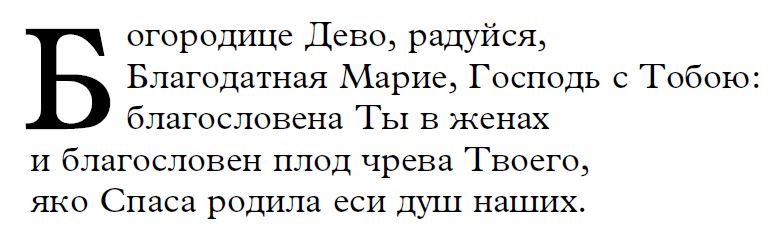
Rejoice, O virgin Mary, full of grace, the Lord is with thee: blessed art thou among women, and blessed is the fruit of thy womb, forthou hast borne the Saviour of our souls.


Related Posts Plugin for WordPress, Blogger...