 |
Geneticists haven't found a cure for religion yet,
but I'm sure Richard Dawkins has a final solution in mind.
|
On a Catholic blog such as this, one needs not delve into the abortion argument in all instances. It is well known that the Church rejects abortion in all circumstances as an offence to God and the direct killing of the innocent. The Church does not claim that the direct killing of the unborn child with Downs Syndrome is worse than the direct killing of the unborn child dispensed with as medical waste for any other reason. The Church defends the dignity of every human life from conception to natural death.
The 'Gaffe'
There will be atheists who will find Richard Dawkins's latest Twitter contribution to be abhorrent and lacking in humanity. There will be other atheists who agree with him and there will be some who are unable to formulate a comprehensive opinion because while they find his opinion
objectionable, they cannot gather together a
logical response to his argument without an appeal to something which, from Mr Dawkins's point of view, is vague, tenuous or even irrational. We can all gather together a response of kind to Mr Dawkins, but would Dawkins accept it?
For nobody can deny that there is a certain
logic in most of Richard Dawkins's statements, however 'off the cuff' they may be. We may not agree with them, but many of them are purely logical if we are totally alone in this Universe, without a Creator in as much good and evil, as we have hitherto known them, no longer exist. I say this not to dignify Richard's position, which is evil, but to suggest that evil can
become 'logical' without the existence of a loving God. I have to say that brutal scientific
logic has never really impressed me greatly as I have never found either mathematics, economics or science particularly inspiring. Some people are interesting in how things work and I'm really not. I was not interested in that before I believed in the Catholic Faith and I am not interested in that now.
Scientificism
It has been said before by others that Richard Dawkins is in some ways a great gift to the Church because he keeps on revealing what atheism really
is and the moral abyss of nihilism into which it leads. Others will say, in the face of such callous statements that this is not 'my kind of atheism' - because its not really
humanism - and yet, ultimately, atheism denies to the one who disagrees with this opinion a logical right of reply because atheism denies an objective reality or objective set of moral truths grounded in divine revelation or even natural law. In atheism, there is no moral truth, only moral opinion. Therefore, before the horror of Richard Dawkins's opinion on the unborn child with Downs Syndrome, the concerned atheist has two places to go - to natural law - or to the God, for what else is there and Who else is there on his side? The atheist may form a 'community' who take issue with Dawkins, but is simply the momentum of the 'community' enough? It is not majority opinion that makes right, right and wrong, wrong.
Can the confirmed atheist really say,
'I am an atheist and I disagree with Richard Dawkins'? He can, of course, say it, since it is a matter of
opinion, but ultimately, he cannot confront Mr Dawkins with a convincing
logical argument that defeats the repellent point of view he has posited.
All combatants of Richard Dawkins are dealing with an unapologetic
rationalist here and a particularly pure kind of rationalism it is as well. And for the theist as well as the atheist, this is why Richard Dawkins is so difficult to meet head on. He poses the eternal questions and asserts his logical answers. For in a
godless world,
logic really is on his side, if the prevailing human logic of the age asserts that there is 'life' and there is 'life worthy of being called life' and this is what makes the enigma of Richard Dawkins so frightening. He raises a spectre that simply will not be exorcised. Dawkins almost forces the one who does not believe in God into a corner and says, 'You do not like what I say, but
logic - my logic - the logic of the scientist - is on
my side.' There is no love here. What we understand as compassion has no place here. This is
scientificism, yet human life, from our perspective, is not a
science.
Moralising Atheists
Or so it at first seems. What did the woman ask? Did she indeed, ask anything? Here is what she said...
"I honestly don't know what I would do if I were pregnant with a kid with Down Syndrome. Real ethical dilmemma."
How did Mr Dawkins reply?
"Abort it and try again. It would be immoral to bring it into the world if you have the choice."
It cold, its brutal, its rational, its logical, its
scientific. It was also the kind of reply that was
not called for. Literally.
 |
| "Some people have Downs Syndrome. Get over it!" |
See, the woman expresses a fear of how she would react in a given situation and Dawkins, being a typical man, immediately offers her a solution. A final one at that. The woman has made a statement.
She says, 'I don't know [in situation X] what I would do'. Dawkins immediately tells her
what to do! By all accounts, that's a bad move. Here we have the logic of the male. It turns out that Mr Dawkins is something of a patriarch! If it had been directed at me and I had replied,
'Keep it for Heaven's sake! It would be immoral to kill a child just because s/he had Downs Syndrome!' how would she react?
"Abort it and try again", is his reply. This is something of a command, is it not? Somewhat the inversion of 'Go forth and multiply'. Next Mr Dawkins
moralises to the woman. That's right. Atheists can
moralise, even though there is no objective
moral authority but for 'my considered opinion' upon which the atheist draws. In an astonishing assertion, Dawkins insists, "It would be
immoral to bring it into the world". Note too, that the unborn child is an 'it'. 'It' should not be allowed to exist. But who says so? By what authority does Dawkins claim that 'it' should not be allowed to exist? 'Into the world' he adds? Whose world is this? Our world? Or Dawkins-world? The Brave New World?
Judgemental atheists
90% of unborn children with Downs are already aborted in this country, so Mr Dawkins touches on something of an open wound in British society. Are the 10% of parents who
do not abort their child with Downs choosing a course of action that is 'immoral'? Are they guilty? If so, guilty of what? Bringing 'inferior' human beings into the world? Making the world genetically less pure? Who is inferior to whom? Can it be empirically proven that this is the case? Is that all we are? Walking genes?
None of this is made clear. Dawkins can draw upon no authority but
himself, because for him God does not exist, nor the authority of the Church, nor any other credible moral authority, despite the fact that
another atheist may rightfully disagree with him, reaching the opposite conclusion according to his own lights or natural human compassion.
And yet can the 'nice atheist' confront Mr Dawkins with anything here to say,
'You are totally wrong'? Not really. An entire army of atheists can stand up and say, "What a deeply unpleasant thing to say!" But logic does not have to be
pleasant. Logic, as Richard has said in his
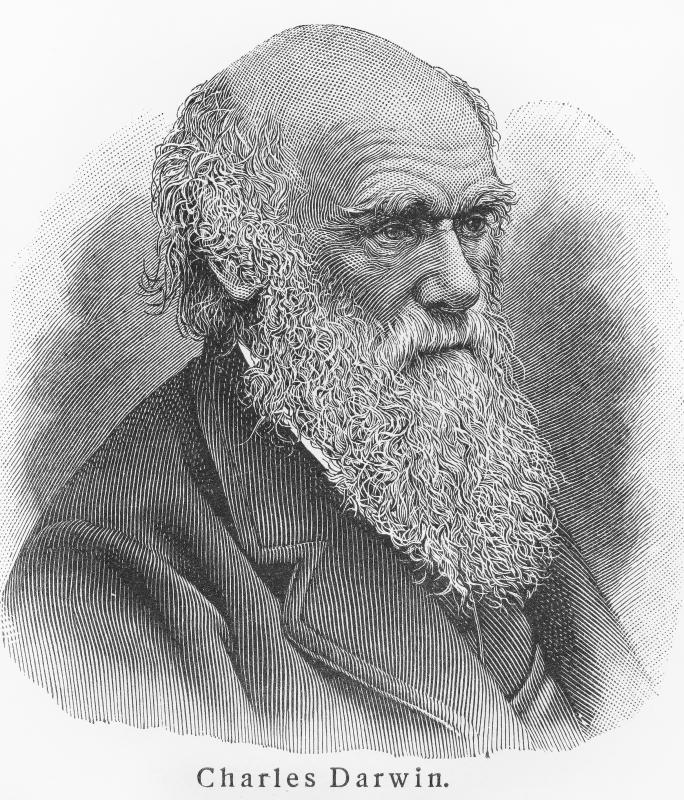
'apology' does not need to take account of feelings. In the 'law of the jungle', feelings, remember, are for wimps. We are talking here about the 'survival of the fittest'. We're talking about the quality of the 'human species'. For this we can thank Darwinism.
Most atheists argue from a point of empiricism. Yet empiricism doesn't offer to Dawkins any evidence that it would be
immoral to bring a child with Downs Syndrome into the world. That is a
value judgment. It is not even scientific, unless science imposes
a set of human values on the human race and then calls those values science, beyond reproach.
Unless Richard makes a real
judgment on Downs Syndrome, or rather, the little one with the condition, what evidence is there concerning the morality of bringing to term a child with an extra chromosome? Unless we are grading human beings upon their inherent 'worth' or 'fitness' from a rather arrogant,
subjective position, then there really is none since none of us are perfect genetic creatures.
Neither is there any real
empiricism concerning the value of the life of a child with Downs Syndrome, or any condition, like, say, aspergers or epilepsy. Who decides who is genetically 'fit'? Who decides what 'suffering' is? Who quantifies what level of 'suffering' is acceptable in the prospective life of an unborn child or his or her parents and what level of suffering is not? Who decides what cosmetic or real beauty is? Where does this stop? If we are not in possession of an
absolute moral stance on the value of
every human life, then we cannot really object if Dawkins targets one group, for let's face it, it may as well be gypsies, Jews or people with brown hair. Perception of 'worth', or value to the human species is in this scenario only in the eye of the beholder. Without God Almighty, I would argue that all we're banking on to keep us from pre-born genocide is natural human compassion and reason which may very well let us down. It has before and it does today. This is
why 90% of children with Downs Syndrome are aborted.
And yet, who is one atheist to say that the rationale of Dawkins's morality is inferior to the rationale of the 'good atheist'? The atheist can say, 'This is eugenics!" and Mr Dawkins can reply, 'Well, I am a eugenicist. Do you have a problem with that?' He hasn't said that, but he could, if he was more honest. Why? Because even though Richard has made an
absolutist statement concerning children with Downs Syndrome, moral absolutes, to the general atheist, do not exist (except when, like Dawkins, they subjectively decide that they do). Why shouldn't he be a eugenicist if there is no objective reality or fixed morality at work in human life? Let's face it, just because the world is inhabited by many atheists, there is no fixed reason why all atheists should subscribe to a
fixed morality, but don't say Hitler, Stalin and Pol Pot didn't warn you!
The Appeal to Compassion and Human Experience
The appeal to compassion and the lives of children with Downs Syndrome bringing joy into the lives of families is fine, but it does not answer Richard Dawkins's inhuman logic, cold and brutal as it is. He is entitled to his repulsive opinion, however much we think its abhorrent. His view is that this disease should be
eliminated. This is based in the assumption - the scientific assumption - that genetic conditions such as this are negative of their own nature. There is only black and white here, a kind of atheistic, scientific fundamentalism as dangerous as the concept of a bloody Islamic Jihad. This is a brutal ideology. Human experience and compassion, natural bonds of love and affection do not come into this school of thought. The only way in which Downs Syndrome can be effectively
eliminated is by eliminating the persons who may acquire it in the womb, thus ridding the world of pre-disposed genetic 'imperfection'. In his stated view, it is not compassionate, rather it is
immoral to allow an unborn child with Downs Syndrome to be born.
 |
| But we do, if we reject this child. |
With 90% of unborn children in the United Kingdom, you could say the UK Government is well down this path, with the help of British citizens. Human existence is not 100%
logical, nor is it
utopian. It is imperfect and flawed. As human beings, we are all imperfect and flawed, but made in God's image and likeness unto the soul. What we see in Dawkins's horrendous 'gaffe' is no 'gaffe' at all, but a perfectly understandable response to a World in which God has been eclipsed by reason and
flawed human logic, a World in which human life is not sacred, or valuable in and of itself, a brave new world in which the 'fit' survive and the vulnerable and defenseless are abandoned in pursuit of a vision of genetic perfection that has already, in the 20th century, been discarded as
contrary to our very humanity.
While Richard Dawkins issues his 'apologies', as Catholics, we make no apologies for what we believe. We have no reason to apologise for professing the Gospel of Life and of Love. We believe that God loves and made
every human being to be cherished and nurtured from conception to natural death. We don't offer any other explanation for our existence but the loving Hand that crafted us in our mother's wombs. We can account very easily for the evil that men do and the evil that men believe in, instead of God. We do not believe that some lives are more valuable than other lives. We believe that God is the beginning and end of our existence. We were not made for nothing.
 |
| Atheists: Isn't this the problem? |
We believe that Jesus Christ has redeemed our fallen humanity and raised us up to a higher dignity than that which we could ever have imagined. We believe that every child is a gift. What we do with that gift, God leaves up to us. With the support of the British Government, 90% of unborn children with Downs Syndrome are not permitted to see the light of day. Every abortion is a scandal and a crime against God and His children. We pray that we and this country, once so fervently Catholic that it was named 'Our Lady's Dowry' will reject the law of the 'survival of the fittest' and replace it with the law of the protection of the unborn child. Why? Because the law of God calls us to, universally, reject
evil and choose
good, to refuse
death and to embrace
life.
You atheists, of course, you knew we believed that already, but in the face of Dawkins's 'gaffe', we see that atheistic 'logic', devoid of faith, or hope, or love, or genuine compassion or justice, can lead an atheist into a belief system that was embraced by Adolf Hitler and the Nazi regime. It's not really human logic. It is inhuman logic. It's a logic grounded in the
pre-conceived,
prejudiced, pseudo-scientific beliefs of many inside and outside the scientific community concerning Downs Syndrome, genetics and the application of genetics to human value and worth.
It should have no place in 21st century Britain but abortion figures reveal that it
does and it does because the view is clearly prevalent that some people are defective, when the only objectively defective thing to see here is the
moral condition of the British. The only way in which Dawkins's view can be deemed
rational is if we accept his cruel and inhuman
rationale, that some people, subjectively, have more innate
value than others and that the others should be discarded. We Catholics do not believe that.
I ask you, atheists: What do you really believe?








_-_James_Tissot.jpg)


